
Why It is Wise to be Cautious
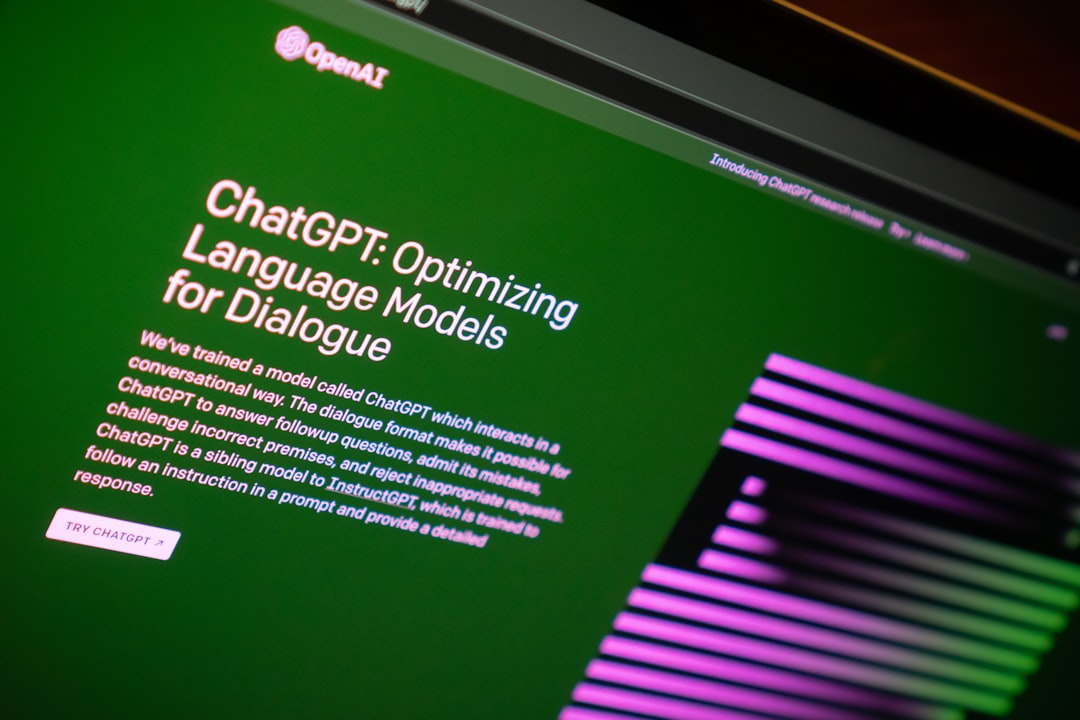
As you may know, I strongly advocate using automation and technology in recruiting and I am sure that every recruiter is experimenting with Open AI’s ChatGPT.
It is a remarkable tool and will eventually revolutionize the Internet and its use. But I am concerned that we are jumping on the ChatGPT bandwagon prematurely and without proper care.
We already have many excellent tools that are underutilized and could streamline our work. But unfortunately, they are not as sexy or exciting as ChatGPT.
The news media is enamored of ChatGPT and everyone is getting into the game. Microsoft has invested heavily in Open AI and will soon introduce a new version of its Bing search engine that utilizes ChatGPT. Google has demonstrated a competitor but has not yet made it available to the public. Other firms are scrambling to compete in what promises to be a new age for search and for generating content. Yet even in the demonstrations staged to showcase the power of ChatGPT and other similar tools, the tools have returned misleading or factually wrong answers. It is wise to be cautious.
Many articles document how it can enhance recruiting by writing job descriptions, creating marketing messages, and assessing candidate skills. There are claims that it will replace all recruiters and revolutionize recruiting. I heard those same arguments when the first applicant tracking systems were introduced in the early 1990s. And again when LinkedIn became mainstream.
Is ChatGPT really going to revolutionize recruiting? Is it sophisticated enough and refined enough to be a practical tool? Is it even legal or ethical to use it? Is it effective, or is this a case of recruiters being taken in by what seems like a panacea to many of their problems?
Those are the big questions, and there are several legitimate concerns about using ChatGPT for recruiting.
Marketing and Job Descriptions
When ChatGPT is used to write a message to a candidate or reach out to a prospect with a message, the content will be generic and likely not engaging. All AI is dumb and lacks any understanding of what it is writing. It does not understand the context of the message and does not have intuition or empathy. It cannot yet, at least, personalize a message for a specific person. The job descriptions I have asked it to write and those I have seen are generic and as boring as the ones we usually post.
It can still help create a template for a more engaging job description or a personalized note as long as someone edits them. It may provide ideas for a more thoughtful and targeted message by including information you did not think of or forgot. I believe it is important not to take the output from ChatGPT and use it without severe vetting and editing.
Assessment
ChatGPT still has a long way to go in judging a candidate’s fit or skills. It can do so only by using a checklist approach. It can screen a resume and match a candidate’s stated skills to a set of previously determined requirements, but it cannot judge the quality of those skills or the quality of experience as well as a person can.
Scheduling Interviews
AI can easily do administrative tasks such as scheduling interviews. AI is excellent at doing simple, repetitive things that follow a clear set of rules. The challenge begins when we task AI with making judgments or decisions. Many of our decisions are partially based on a set of unwritten and unspoken values and operating principles that are learned from our family, society, and corporate culture. They are unconscious and extremely hard to articulate, but they are very important in helping shape our behavior and judgment. AI has no idea about these and, like Dr. Spock on StarTrek, can only provide a logical, unemotional result. This is a major stumbling block for AI that may be overcome someday. But we are not there yet.
Accuracy & Bias
Like all AI tools, it is only as accurate as the models it has been trained on. If the data used is biased or contains errors, those will be echoed in its output. ChatGPT uses a wide range of data that is not directly derived from your candidates or employees. Even though it may have scanned millions of people and data points, when it is writing a job description or marketing message, the result may or may not be accurate or even effective for your audience. Does the message engage your audience? Is it discriminating or biased in some way? Is it attracting the people you want it to attract? You will need to gather data and carefully assess whether it is attracting the candidates you want in an unbiased manner.
Legal and Ethical Concerns
I don’t believe any credible organization has examined or ruled yet on the legal and ethical aspects of ChatGPT. But I expect there will be challenges and many issues that will need to be resolved before ChatGPT or any similar tool can be widely used and accepted. Algorithms are not transparent and are so complex that even the creators may not fully understand how they make a decision or recommendation. Data privacy and discrimination, as well as a lack of understanding about how the algorithms arrived at a conclusion, is another concern.
AI cannot assess or evaluate the intangible aspects of recruiting, such as the candidate’s use of language, facial expressions, or attitude. These are all critical factors in how a recruiter or hiring manager judges a candidate.
How to Best Use it
It is OK to experiment with using ChatGPT, particularly in generating marketing content or messages for candidates. It can help create a template or generate ideas you may not have had. But it is important to remember that these need to be edited and personalized by you.
AI and ChatGPT can be used to do administrative and repetitive tasks. It can gather and input data, schedule interviews, create offer letters, and do other similar tasks.
ChatGPT can be used as a chatbot to interact with candidates and answer questions they have more intelligently than scripted chatbots. But this will require setting this up, testing, and ensuring that it does not discriminate against any candidate group. This is a very time-consuming and challenging process but legally and ethically necessary.
I am sure it will eventually make a big difference but perhaps not quite yet. So, go ahead and play with it and experiment, but be careful and aware of its many shortcomings and limitations. It is easy to be enamored of a product before it is thoroughly tested and developed.
Consider a Paid or Free Subscription
You can help me immensely by paying for a subscription. I cover all the costs of publishing this myself and any help is appreciated.
Occasionally, I publish something just for paid subscribers – a white paper, report, or podcast – I try to do two or three of these each year.
ARTICLES OLDER THAN 2 WEEKS ARE AVAILABLE ONLY TO PAID SUBSCRIBERS.
SPECIAL FOR THE MONTH OF FEBRUARY ONLY, AN ANNUAL SUBSCRIPTION IS ONLY $30.
Thanks for considering this.
Notes
Also, link to the 15,000 professionals that follow Kevin on LinkedIn.
Join our Twitter feed at @FutureOfTalent
Recent Comments